
Cover Blurb
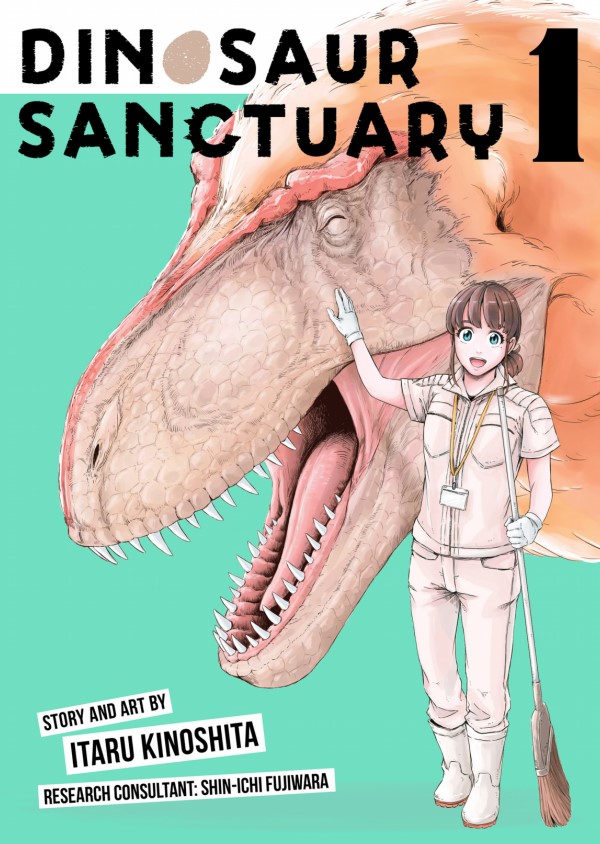
Dinosaurs are alive! In 1946, a remote island was discovered where dinosaurs never went extinct. Through breeding and genetic manipulation, dinosaur populations increased and dino-mania reached a fever pitch worldwide…until a certain terrible incident occurred. Afterward, dinosaur reserves like Enoshima Dinoland fell on hard times. Enter Suma Suzume, a kindhearted rookie dino-keeper! Can she be the one to save Dinoland from extinction?
My thoughts
At roughly the midpoint in the film Jurassic Park, Alan Grant, Ellie Sattler, and the other characters leave the tour jeeps to visit a sick Triceratops being tended by the park’s staff. Sattler surmises that the Triceratops is eating poison berries found in the surrounding fields, although she is told by the park veterinarian that the dinosaurs don’t go near them. In the novel version of the scene, the sick dinosaur is a Stegosaurus, and Sattler and the others deduce that the animal is inadvertently eating the poisonous plants when it swallows the gizzard stones it needs to grind up food. In both versions of the story, it is a nice scene that helps establish the setting’s dinosaurs as actual animals and allows us to “ooh” and “ahh” before all the running and, uh, screaming.
The manga Dinosaur Sanctuary is made up of such scenes. With art and stories by Itaru Kinoshita, and paleontologist Shin-ichi Fujiwara acting as technical adviser and contributing columnist, the comic book series offers a kinder, gentler take on Jurassic Park. The manga is set in an alternate timeline where a lost world of dinosaurs was discovered shortly after World War II and scientists reserve engineered the animals to resurrect their prehistoric ancestors. The background honestly doesn’t matter as it simply serves as an explanation for why dinosaurs are ubiquitous in the modern day. Suma Suzume is an optimistic young woman who dreams of working for one of the many dinosaur zoos found in Japan and throughout the world. She lands a job at Enoshima Dinoland, a zoo on the edge of financial ruin thanks to a public that has grown wary of dinosaurs. Suma believes the crowds can be wooed back, but first, she needs to learn a little about the care and feeding of multi-ton reptiles.
Dinosaur Sanctuary is a continuing series currently in its third collected volume at the time I write this (at least in the U.S.). Most comics—and frankly, most dinosaur entertainment—usually portray the terrible reptiles as just that: large and menacing, with lots of violence and gore. Dinosaur Sanctuary’s dinosaurs are more or less real animals, and the series is about the wonder associated with them. The manga has a large cast of human and dinosaurian characters, and both are given fleshed-out personalities. The stories can be broken into roughly three categories: 1) Veterinary mysteries where a dinosaur is displaying unusual medical symptoms or behavioral quirks that the human characters must remedy; 2) Suma’s attempts to reignite the public’s passion for Dinoland’s star attractions; 3) Flashbacks in which we learn more about the supporting human characters and their relationships with the animals they care for. Also, I should note that Suma is the daughter of the scientist primarily responsible for bringing back the dinosaurs, which leads to some dramatic tension in later issues.
The manga is a slow-burn series so you will need to be invested in the characters and setting to stick with it. Fortunately, Itaru excels at both, giving us well-rounded and likable characters who are hard not to root for. And the art is freakin’ fantastic. The human characters are drawn in the standard manga/anime style—big eyes, great hair—but the dinosaurs are rendered with a level of detail and realism I’ve never seen in a comic before. I’m honestly in awe at every panel featuring one of the animals, with even the tiniest features like the scales on the bottom of a Stegosaur’s neck painstakingly recreated. The backgrounds can be a little plain at times, mostly so the reader’s attention isn’t diverted away from the animal on the page. But when Itaru fleshes out the surrounding world, it’s a sight to behold. (Like most manga, Dinosaur Sanctuary is primarily black and white, although there are occasionally a few pages in color.) Shin-ichi’s consulting helps add realism to the dinosaurs’ depictions. He also pens columns appearing in each issue that explain the science behind the stories, with topics ranging from the posture of Triceratops to what we know—and don’t know—about dinosaur behavior.
Dinosaur Sanctuary has a little bit of gore as tending to large animals can get messy, particularly when it comes to feeding the carnivores. It also has some violence, but unlike in Jurassic Park where the main aim was thrills, one of the more violent scenes in the comic is its most heartbreaking. This is a series about a dinosaur zoo focused on the business of zookeeping and how awesome it would be to care for the beasts. I hope that the comic generates enough sales and interest to allow Itaru to continue the story. I know I will be following it.
Trivia
- Dinosaur Sanctuary is published by Seven Seas Entertainment. Visit the series page on the publisher’s site.
- Just a heads-up: The pages and story panels are ordered right to left. This can take some getting used to for Western readers not familiar with manga.
- The manga also features marine reptiles and pterosaurs. Again, don’t get hung up on the science underpinning their presence in the modern-day world—that’s not the point.

 Prehistoric Pulp